
By Korede Akintunde in Lokoja – April 26, 2026
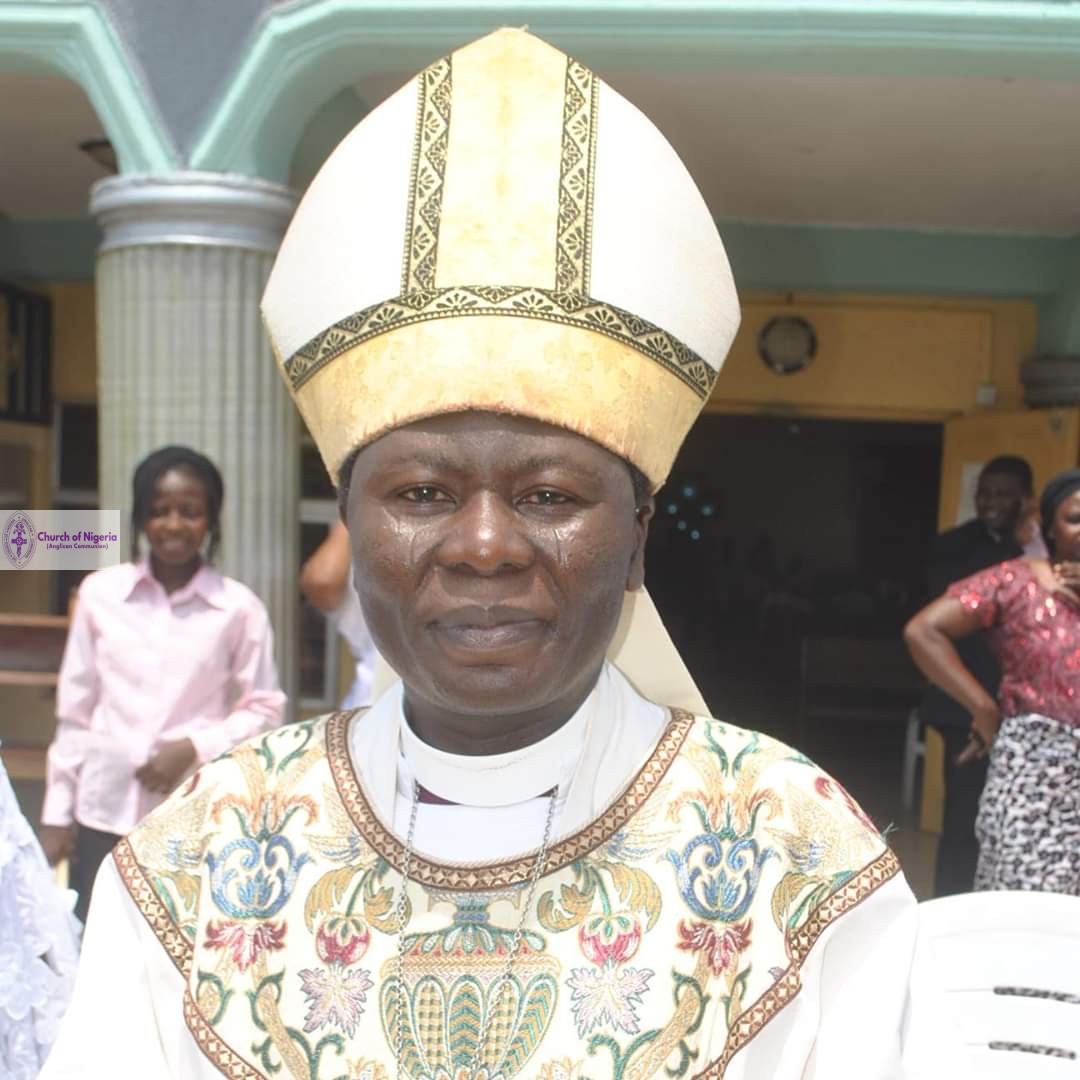
The Most Reverend Dr. Emmanuel A.S. Egbunu, Bishop of the Anglican Diocese of Lokoja, has issued a clarion call for the deliberate raising of a godly generation, warning that Nigeria’s moral collapse stems from weak spiritual foundations and unmanned gates at family and institutional levels.
Speaking at the opening ceremony of the 2nd Session of the Eleventh Synod on April 25, 2026 at Christ Anglican Church, Lokoja, the Bishop presented a comprehensive charge anchored on the theme ‘Raising a Godly Generation,’ drawn from Psalm 78:5-7 and Matthew 19:14.
Bishop Egbunu emphasized that a godly generation is not spontaneous but ‘the outcome of intentional, deliberate, and specific input.’ Tracing biblical foundations from Abraham through the Exodus, he stressed that the home is ‘the child’s first school’ where parents bear primary responsibility for spiritual formation. The Bishop called for the establishment of the ‘Family Altar’—dedicated times for family prayer and Bible reading—as a non-negotiable spiritual discipline. He also highlighted the critical role of godparents in baptism, the Sunday School, and premarital counselling in shaping Christian values.
The Bishop painted a sobering picture of Nigeria’s youth, caught between what they are taught at home and in church—that stealing, violence, and selfishness are wrong—and what society models and celebrates. ‘How did we ever get to this point of moral bankruptcy?’ he asked, attributing the crisis to weak foundations and the failure to secure the ‘gates’ of homes and institutions against worldly influences including media, social platforms, and peer pressure.
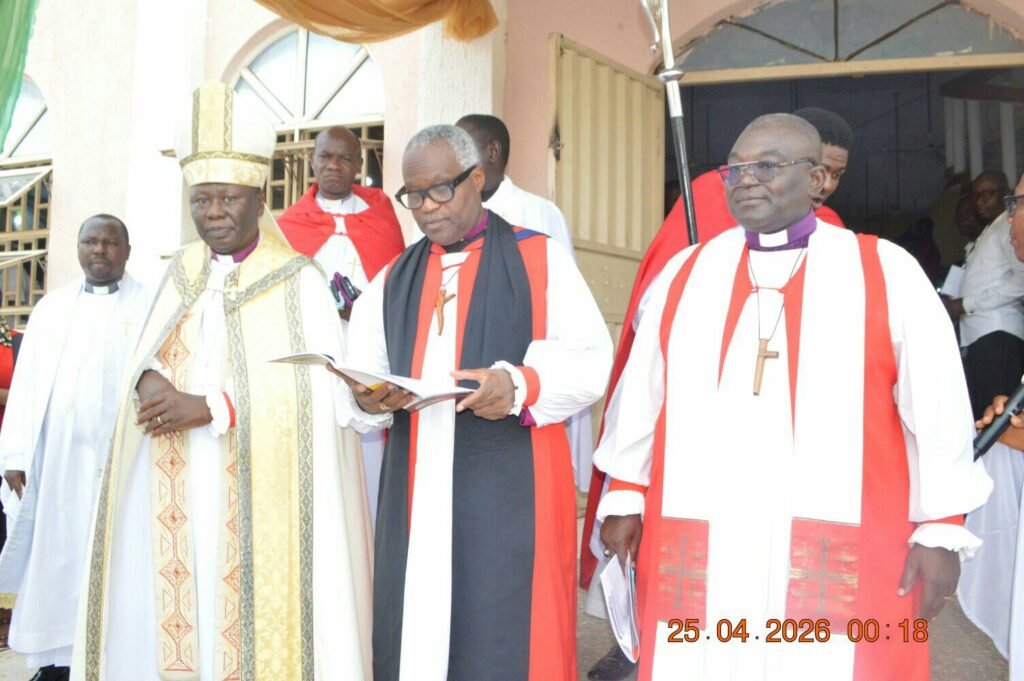
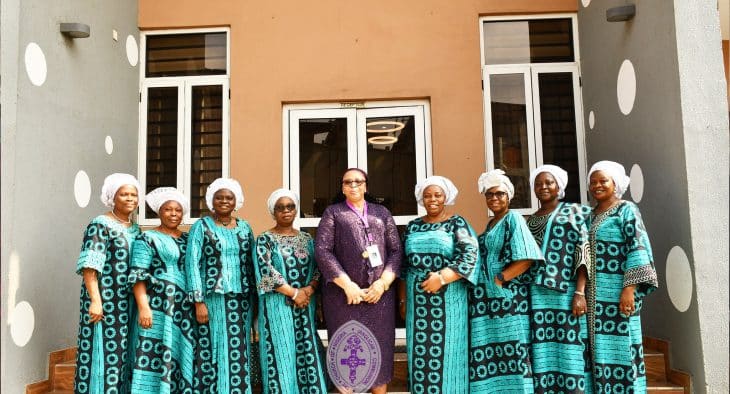
Archbishop Egbunu identified the shortage of Christian Religious Studies (CRS) teachers in schools as a critical crisis point. He lamented that while parents invest heavily in expensive secular schools, they show little interest in spiritual education. He emphasized that 90% of brain development occurs by age five, making early childhood spiritual formation foundational. The Bishop commended the Mothers Union for addressing this gap and called for renewed diocesan commitment to Sunday School training and resources.
In a sobering section, Archbishop Egbunu addressed the nation’s security crisis directly, describing Nigeria as ‘a nation at war with itself.’ He cited recent commentaries noting that international observers have identified warning signs Nigerian leaders appear unwilling to acknowledge. The Bishop warned that ‘the signs are ominous’ and that ‘God cannot be silenced and He will speak in His own way and time.’ He emphasized that prayer cannot be offered in denial of truth, as such would constitute hypocrisy.
The Bishop called for renewed emphasis on the Anglican Catechism and 39 Articles of Faith; investment in Sunday School teachers and resources; addressing the CRS teacher shortage; rigorous premarital counselling; exploring adoption as a ministry opportunity; partnering with student ministries; and preparing disciples to serve as ambassadors of Christ in the marketplace. He emphasized that the Church must go to the marketplace rather than waiting for people to come to church.
Bishop Egbunu concluded with Jesus’ words from Matthew 19:14: ‘Let the little children come to me and do not hinder them, for to such belongs the kingdom of heaven.’ His charge represents a comprehensive blueprint for spiritual renewal at a time when Nigeria faces unprecedented moral and security challenges. It calls for a return to biblical foundations and recognition that raising a godly generation is not merely a religious exercise but a matter of national survival and redemption.