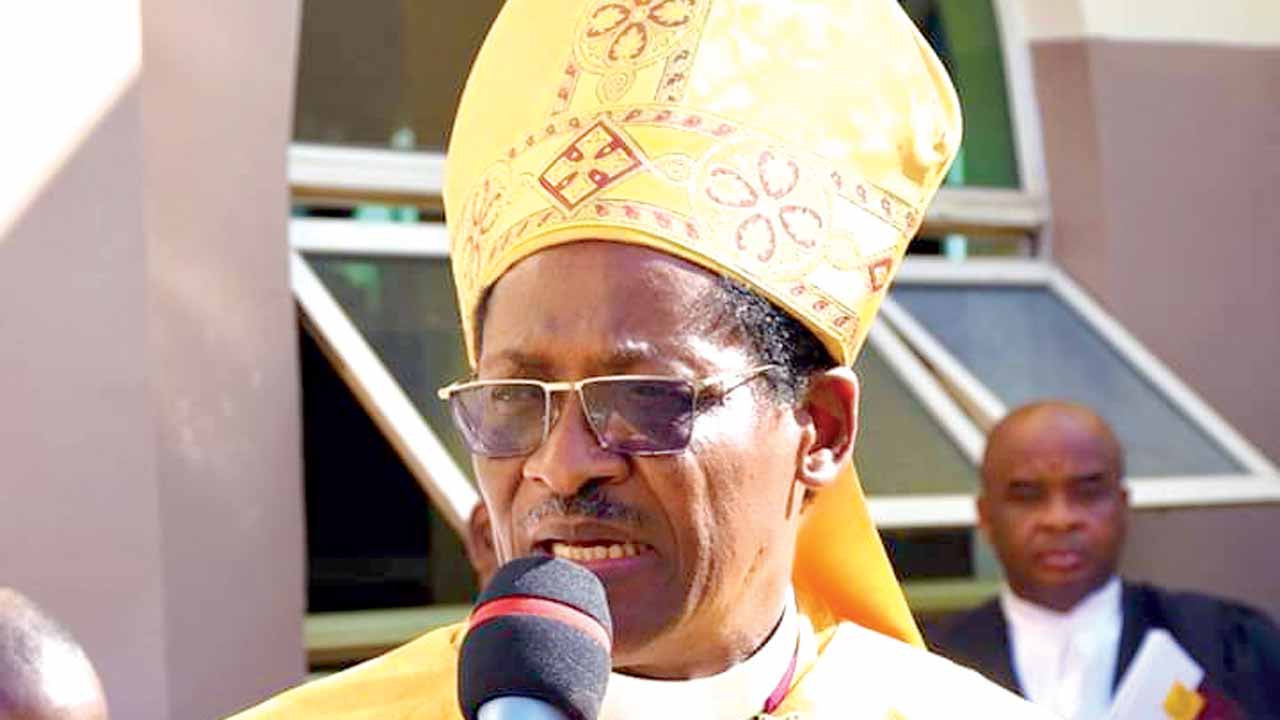

The Archbishop of the Church of Uganda, the Most Rev Dr Stephen Samuel Kaziimba Mugalu, has responded to critics urging a more confrontational stance toward the state, saying he will not seek martyrdom in the manner of Archbishop Janani Luwum.
Preaching on Sunday, 19 April 2026, at the installation of the Rev Canon Michael Mukhwana as Archdeacon of St John’s, Makerere University, Archbishop Kaziimba addressed comparisons with Luwum directly. “Some people have approached me saying, ‘Why don’t you do like Janani Luwum?’” he said. “The man did a great job—the man who was killed. Do you think I can make an impact by being killed? … Don’t I have a family? Why don’t you be sensitive?”
“I have a life to live,” he continued. “I’m not your saviour to carry all your problems. You take them to the Cross. I do my part and leave it to God.”
The Archbishop framed his approach in biblical terms, contrasting what he described as the “Nathan approach” with the public witness of John the Baptist. Referring to 2 Samuel 12, he said the prophet Nathan’s private confrontation of King David achieved repentance, whereas John the Baptist’s public rebuke of Herod led to his execution. “You can do God’s work by approaching power with love, quietly,” he said. “Not every time that we use one approach.”
His remarks come amid renewed debate in Uganda over the role of religious leaders in public life following the January 2026 general election, in which President Yoweri Museveni secured another term. Opposition figures and civil society actors have alleged ongoing human rights abuses, including abductions, unlawful detention, and restrictions on civil liberties. In recent days, the late Kalangala Woman MP Helen Nakimuli—who died on 19 April—had called on clergy to “speak truth to power,” a comment widely circulated on social media.Reaction to Archbishop Kaziimba’s sermon has been mixed. Some commentators have criticised what they view as caution or silence, while others have defended a strategy of engagement that avoids public confrontation.
The legacy of Archbishop Janani Luwum continues to shape these expectations. Luwum, who served from 1974 to 1977, was arrested after protesting against killings and abuses under Idi Amin’s regime and was murdered on 16 February 1977, in what was officially described as a car accident but is widely regarded as an assassination. He is commemorated as a martyr across the Anglican Communion, with a statue at Westminster Abbey and an annual public holiday in Uganda. The Church of Uganda marked the 49th anniversary of his death in February 2026.
Archbishop Kaziimba has, at various points, spoken against violence and so-called “drone abductions,” and in his role as chair of the Inter-Religious Council of Uganda has called for peace, dialogue, and restraint during electoral periods. His comments at Makerere indicate a continued preference for what he presents as pastoral and strategic engagement rather than public denunciation.
Elected in 2019 and enthroned in March 2020, Archbishop Kaziimba is the ninth primate of the Church of Uganda. A former Bishop of Mityana, he is associated with a conservative theological outlook and an emphasis on evangelism, biblical teaching, and provincial self-reliance. Under his leadership, the Church of Uganda—one of the largest provinces in the Anglican Communion—continues to navigate the demands of public witness in a politically sensitive context.
The question of how the Church should speak in moments of national tension remains unsettled. Archbishop Kaziimba’s remarks suggest a deliberate choice of method rather than a withdrawal from engagement, even as debate continues within Uganda and across the wider Communion.
George Conger
Anglican Ink