
Dear people of God,
The peace of our Lord and saviour Jesus Christ be multiplied unto you all. This is a pastoral guidance for the Clergy and Laity of the Diocese of AMC Europe.
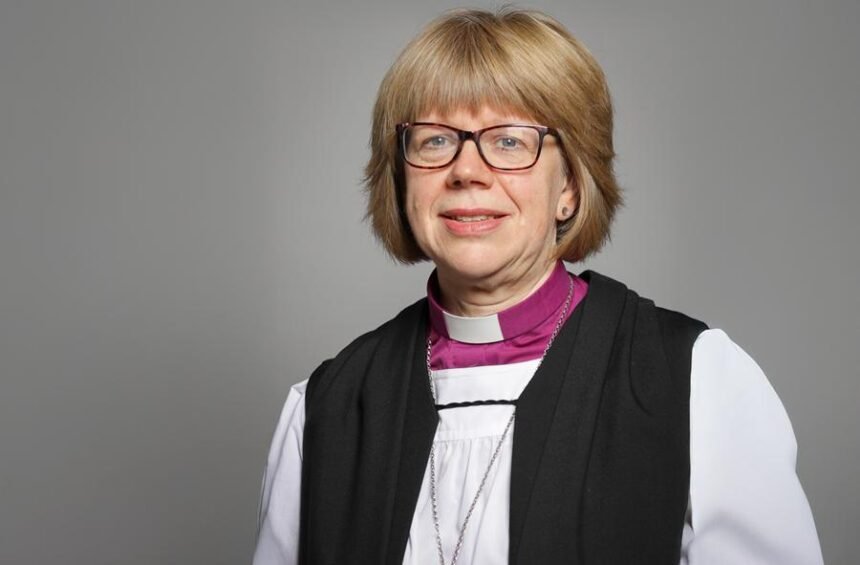
On Friday October 3, 2025 it was announced that Dame Sarah Mullally, the current Bishop of London will be the 106thArchbishop of Canterbury. This announcement brought varied questions and responses from Anglicans around the world. The leadership of the orthodox Anglicans to which we belong, have responded with clarity and we wish to streamline them here for our guidance.
GAFCON, which stands for the Global Anglican Future Conference, is a global movement of conservative, orthodox Anglicans. It was formed in 2008 in response to the departure from biblical authority within parts of the Anglican Communion, primarily concerning issues of sexual ethics and revisionism.
What GAFCON Believes and Does
GAFCON’s identity is built upon several key pillars1:
· Biblical Authority: GAFCON believes that the Holy Scriptures are the supreme authority for doctrine and life, and are “God-breathed” and without error. GAFCON observes with disappointment that other parts of the Anglican Communion have elevated human reason and secular culture over this authority.
· The Jerusalem Declaration 2008: This document serves as GAFCON’s contemporary standard of faith. It affirms the Bible, the ancient creeds, the Thirty-Nine Articles, and the Book of Common Prayer as foundational. It also explicitly upholds marriage as between one man and one woman which is in line with Lambeth Resolution I.10
· A Global Family: GAFCON is a coalition of mostly Global South provinces (e.g. Church of Nigeria Anglican Communion, Church of Uganda, Kenya, Rwanda) and orthodox Anglicans in Western nations(Anglican Church in North America, Australia, Newzeland). It represents the majority of the world’s active Anglicans (about 85% of the global Anglican population).
· Guardians and Missionaries: The movement aims to guard the traditional gospel from false teachings and to proclaim it globally. This includes planting new churches and providing oversight for conservatives who feel alienated from their liberal-leaning national churches.
Why GAFCON Was Formed
GAFCON was not created suddenly but emerged from a long-simmering crisis. In 1998 Lambeth Conference, Resolution I.102 passed and affirms in a summarised form that:
i. Marriage is between a man and a woman
1 https://gafcon.org/about/
2 https://www.anglicancommunion.org/resources/document-library/lambeth-conference/1998/section-i-called-to-full-humanity/section- i10-human-sexuality [See full text in the appendix].
ii. Homosexual practice is incompatible with Scripture.
iii. The Church must minister pastorally and sensitively to all regardless of sexual
orientation.
· The Breaking Point (2003): Against the provisions of Lambeth Conference Resolution I.10, the Episcopal Church of the USA (ECUSA as it then was) but now The Episcopal Church (TEC), elected and consecrated Gene Robinson, an openly gay man in a same-sex relationship, as a bishop in The Episcopal Church (USA) in 2003 for the Episcopal Diocese of New Hampshire. This came after a Canadian Diocese had authorized a liturgy to bless same-sex unions in 2002.
· A Deeper Crisis of Authority: While homosexuality was the presenting issue, GAFCON leaders noted the real crisis was a fundamental rejection of biblical authority within parts of the Communion. GAFCON was clear that the “Instruments of Unity” (like the Archbishop of Canterbury) failed to discipline the offending provinces, making a united stand necessary.
· An Alternative Gathering: When the Archbishop of Canterbury invited bishops from the very provinces that had caused the rupture to the 2008 Lambeth Conference, many conservative bishops chose to boycott it. Instead, they gathered in Jerusalem for the first GAFCON, creating a fellowship for orthodox Anglicans who believed the existing structures had compromised the faith. This Conference produced the Jerusalem Declaration 20083.
GAFCON’s Lasting Impact
From its beginning as a conference, GAFCON has grown into a permanent and powerful force that is reshaping global Anglicanism.
· A Continuing Movement: GAFCON is now a continuing movement with a Primates’ Council that provides leadership. It has held subsequent global conferences in Nairobi (2013), Jerusalem (2018), and Kigali (2023). Some targeted conferences like G25 Plano, Texas (2025) and G26 Abuja (2026) which holds next year, all to advance its mission.
· Creating New Structures: A major outcome has been the establishment of new Anglican provinces to provide a home for orthodox conservatives. The most significant of these are the Anglican Church in North America (ACNA), formed in 2009 as an alternative to The Episcopal Church and the Anglican Church of Canada; and The Anglican Network in Europe (ANiE) formed in 2020 to which we belong as an alternative to the Canterbury led provinces. It has also facilitated the creation of similar structures in Australia, New Zealand, and Brazil.
· Redefining Anglican Identity: GAFCON has boldly declared that Anglican identity is not dependent on recognition by the Archbishop of Canterbury. This challenges the centuries-old central role of Canterbury and shifts the centre of gravity of the Anglican Communion toward the theologically conservative Global South.
What is the GSFA?
The Global South Fellowship of Anglican Churches (GSFA) on the other hand is a worldwide fellowship of orthodox Anglican provinces and dioceses that upholds traditional,
3 https://gafcon.org/about/the-jerusalem-statement/
conservative biblical teachings and doctrine within the Anglican Communion. Its origins trace back to about 25 provinces, and it has since developed a formal covenanted membership structure.4
The GSFA’s actions and identity are driven by several key objectives and a firm doctrinal stance:
· Guarding Orthodox Faith: GSFA’s primary objective is to “guard the faith once delivered” and uphold the “historic Anglican doctrine and teachings”. GSFA believes in and pledges loyalty to the “plain teaching of holy scripture”.
· A Commitment to Scripture: The GSFA’s foundational position is that the Holy Scriptures are the “supreme authority” for doctrine and life. GSFA oppose theological moves that accommodate secular culture over biblical authority.
· Upholding Traditional Marriage: A central issue for the GSFA is the affirmation of the traditional Christian doctrine of marriage as a lifelong union between one man and one woman. They hold to Lambeth Resolution 1.10 as the official Anglican position on human sexuality.
Role in the Anglican Communion
The GSFA has become a significant force in global Anglicanism, representing a large portion of the Communion’s members. Its relationship with other Anglican institutions has been shaped by ongoing doctrinal conflicts.
· A Stance Against Revisionism: The GSFA was a key voice together with GAFCON in opposing the Church of England’s February 2023 decision to introduce prayers of blessing for same-sex couples, viewing it as a departure from biblical authority and orthodox Anglican tradition.
· Withdrawal from Canterbury’s Leadership: Following the Church of England’s actions, the GSFA stated it was “no longer able to recognise the Archbishop of Canterbury as the ‘first amongst equals’ leader of the global Communion”. GSFA believe the Church of England has compromised its leadership role by departing from the “historic faith”.
· Offering an Alternative Structure: The GSFA offers a “framework of covenanted relationships” based on an explicit commitment to orthodox doctrine and mutual accountability. GSFA have established their own Primates Council and other structures, with the intention of a long-term reconfiguration of the global Anglican fellowship around confessional boundaries rather than historic ties to Canterbury.
Both GAFCON and GSFA are working closely together to forge a common front in resetting the Anglican Communion as majority of them are members of each others.
The appointment of Sarah Mullally as the new Archbishop of Canterbury presents a profound challenge for orthodox Anglicans. The global conservative GAFCON movement has declared
4 https://www.thegsfa.org/about-us
it can no longer recognize the Archbishop of Canterbury as its leader, framing this as a moment to reset the Anglican Communion on its biblical foundations.
The Official GAFCON and GSFA Position
The Global Anglican Future Conference (GAFCON) responded with a clear and sorrowful rejection of this appointment5. GAFCON’s position, articulated by Archbishop Laurent Mbanda, Chairman of the GAFCON Primates Council, is based on two primary objections:
· Female Episcopacy: It states that “the majority of the Anglican Communion still believes that the Bible requires a male-only episcopacy,” making it impossible for a female Archbishop to serve as a focus of unity.
· Failure to Guard the Faith: More critically, GAFCON notes with sadness Mullally’s promotion of “unbiblical and revisionist teachings” by supporting the blessing of same-sex relationships, which is a direct violation of her consecration vows and biblical authority.
As a result, GAFCON has concluded that “the office of the Archbishop of Canterbury can no longer function as a credible leader of Anglicans,” and officially no longer recognize the Archbishop as an “Instrument of Communion.” GAFCON sees her appointment as a final confirmation that leadership for the orthodox global Anglican future now rests with GAFCON itself.
· A “Missed Opportunity”: The Global South Fellowship of Anglican Churches (GSFA) also viewed the appointment as a “missed opportunity to reunite and reform the Anglican Communion” and confirmed they maintain their position of no longer recognizing the Archbishop of Canterbury as the leader of the global communion.6
The Consequential Stance: Withdrawing Recognition
As a result of these objections, orthodox bodies have been forced to take a definitive institutional stance.
· No Longer an “Instrument of Communion”: GAFCON, referencing its 2023 Kigali Commitment, has stated it can “no longer recognise the Archbishop of Canterbury as an Instrument of Communion” or the ‘first among equals’ of global leaders. They argue the office has relinquished its authority to lead due to a sustained failure to guard the faith.
A Way Forward for Orthodox Anglicans
In response to this decisive break, orthodox leaders are not merely protesting but are actively building an alternative structural future.
5 https://gafcon.org/communique-updates/canterbury-appointment-abandons-anglicans/
6 https://www.thegsfa.org/news/gsfa-statement-on-the-appointment-of-the-rt-revd-dame-sarah-mullally-bishop-of-london-as-the- archbishop-of-canterbury
· Leadership Transfer: GAFCON has declared that the “leadership of the Anglican Communion will pass to those who uphold the truth of the gospel”. They see this moment as a confirmation that the “reset” of the Communion is now uniquely in their hands.
Potential Paths for Response
For individual orthodox Anglicans and parishes, this development may lead to several possible courses of action, informed by GAFCON’s stance and the broader context.
· Align with Alternative Global Structures: GAFCON has announced a significant gathering, the G26 Bishops Assembly in Abuja, Nigeria, in March 2026, which it describes as potentially “the most significant gathering of faithful Anglicans since 2008.” Orthodox Anglicans may look to this and future GAFCON assemblies for spiritual leadership and direction, rather than to Canterbury.
· Seek Oversight from GAFCON-Aligned Bishops: For parishes in England and other provinces where this is possible, seeking alternative episcopal oversight from bishops within the GAFCON network is an established practice to maintain communion with like-minded orthodox leaders.
· Prioritize Doctrinal Fidelity Over Institutional Unity: GAFCON’s statement includes a call for repentance, but its primary focus is on moving forward with its own mission. This suggests that for many orthodox Anglicans, the response will be to prioritize maintaining biblical doctrine even at the cost of institutional unity with the See of Canterbury.
· A Call for Prayer and Repentance: GAFCON’s communique, while firm, ends with a prayer that all hearts, including Mullally’s, would be softened to hear God’s voice in Scripture. This underscores that the response, from an orthodox perspective, should be grounded in prayer both for the wider church and for its leaders.
This is undoubtedly a pivotal moment for orthodox Anglicans. The path forward likely involves a reaffirmation of commitment to traditional doctrine and a realignment of global Anglican structures around these beliefs.
Based on the official statements from the two major orthodox Anglican groups, the response to Bishop Sarah Mullally’s appointment is one of profound sorrow and a firm declaration that the office of the Archbishop of Canterbury can no longer serve as a focus of unity for the global communion.
THE IMPARATIVE FOR AMC CLERGY
Understanding the foregoing, we recommend that the Clergy of the Diocese of AMC Europe should:
A. See this as a missional opportunity to reach out to those among them in our different communities who may have questions arising from this appointment and the uncertain future of the Church of England.
B. The Church should be welcoming, loving and caring. We must love the sinner why condemning the sin.
C. We must strive to be examples of the gospel we preach as we embody it, living the crucified life in a secularised culture.
D. We should strive to understand the ongoing conversations and debates, engage with enquirers with respect while remaining faithful to the authentic gospel, our biblical foundation, biblical authority and Christian orthodoxy.
E. We must be ready at all times to defend the faith entrusted to us as we faithfully fulfil our ordination vows.
“Now unto him that is able to keep you from falling, and to present you faultless before the presence of his glory with exceeding joy, to the only wise God our Saviour, be glory and majesty, dominion and power, both now and ever. Amen” Jude 1:24-25
The Lord be with you His servant and yours
The Right Reverend Dr Gideon Ilechukwu
Diocesan Bishop
Diocese of Anglican Missionary Congregations(AMC)Europe 05-10-2025
APPENDIX 1: LAMBETH CONFERENCE RESOLUTION ON HUMAN SEXUALITY
Section I.10 – Human Sexuality Resolution I.10
Human Sexuality
This Conference:
- commends to the Church the subsection report on human sexuality;
- in view of the teaching of Scripture, upholds faithfulness in marriage between a man and a woman in lifelong union, and believes that abstinence is right for those who are not called to marriage;
- recognises that there are among us persons who experience themselves as having a homosexual orientation. Many of these are members of the Church and are seeking the pastoral care, moral direction of the Church, and God’s transforming power for the living of their lives and the ordering of relationships. We commit ourselves to listen to the experience of homosexual persons and we wish to assure them that they are loved by God and that all baptised, believing and faithful persons, regardless of sexual orientation, are full members of the Body of Christ;
- while rejecting homosexual practice as incompatible with Scripture, calls on all our people to minister pastorally and sensitively to all irrespective of sexual orientation and to condemn irrational fear of homosexuals, violence within marriage and any trivialisation and commercialisation of sex;
- cannot advise the legitimising or blessing of same sex unions nor ordaining those involved in same gender unions;
- requests the Primates and the ACC to establish a means of monitoring the work done on the subject of human sexuality in the Communion and to share statements and resources among us;
- notes the significance of the Kuala Lumpur Statement on Human Sexuality and the concerns expressed in resolutions IV.26, V.1, V.10, V.23 and V.35 on the authority of Scripture in matters of marriage and sexuality and asks the Primates and the ACC to include them in their monitoring process.
1. Called to Full Humanity – Section 1 Report
Subsection 3 – Human Sexuality
Human sexuality is the gift of a loving God. It is to be honoured and cherished by all people. As a means for the expression of the deepest human love and intimacy, sexuality has great power.
The Holy Scriptures and Christian tradition teach that human sexuality is intended by God to find its rightful and full expression between a man and a woman in the covenant of marriage, established by God in creation, and affirmed by our Lord Jesus Christ. Holy Matrimony is, by intention and divine purpose, to be a life-long, monogamous and unconditional commitment
between a woman and a man. The Lambeth Conference 1978 and 1998 both affirmed ‘marriage to be sacred, instituted by God and blessed by our Lord Jesus Christ’.
The New Testament and Christian history identify singleness and dedicated celibacy as Christ-like ways of living. The Church needs to recognise the demands and pressures upon both single and married people. Human beings define themselves by relationships with God and other persons. Churches need to find effective ways of encouraging Christ-like living, as well as providing opportunities for the flourishing of friendship, and the building of supportive community life.
We also recognise that there are among us persons who experience themselves as having a homosexual orientation. Many of these are members of the Church and are seeking the pastoral care, moral direction of the Church, and God’s transforming power for the living of their lives and the ordering of relationships. We wish to assure them that they are loved by God, and that all baptised, believing and faithful persons, regardless of sexual orientation, are full members of the Body of Christ. We call upon the Church and all its members to work to end any discrimination on the basis of sexual orientation, and to oppose homophobia.
Clearly some expressions of sexuality are inherently contrary to the Christian way and are sinful. Such unacceptable expression of sexuality include promiscuity, prostitution, incest, pornography, paedophilia, predatory sexual behaviour, and sadomasochism (all of which may be heterosexual and homosexual), adultery, violence against wives, and female circumcision. From a Christian perspective these forms of sexual expression remain sinful in any context. We are particularly concerned about the pressures on young people to engage in sexual activity at an early age, and we urge our Churches to teach the virtue of abstinence.
All human relationships need the transforming power of Christ which is available to all, and particularly when we fall short of biblical norms.
We must confess that we are not of one mind about homosexuality. Our variety of understanding encompasses:
- · those who believe that homosexuality is a disorder, but that through the grace of Christ people can be changed, although not without pain and struggle.
- · those who believe that relationships between people of the same gender should not include genital expression, that this is the clear teaching of the Bible and of the Church universal, and that such activity (if unrepented of) is a barrier to the Kingdom of God.
- · those who believe that committed homosexual relationships fall short of the biblical norm, but are to be preferred to relationships that are anonymous and transient.
- · those who believe that the Church should accept and support or bless monogamous covenant relationships between homosexual people and that they may be ordained.
It appears that the opinion of the majority of bishops is not prepared to bless same sex unions or to ordain active homosexuals. Furthermore many believe that there should be a moratorium on such practices.
We have prayed, studied and discussed these issues, and we are unable to reach a common mind on the scriptural, theological, historical, and scientific questions which are raised. There is much that we do not yet understand. We request the Primates and the Anglican
Consultative Council to establish a means of monitoring work done in the Communion on these issues and to share statements and resources among us.
The challenge to our Church is to maintain its unity while we seek, under the guidance of the Holy Spirit, to discern the way of Christ for the world today with respect to human sexuality. To do so will require sacrifice, trust and charity towards one another, remembering that ultimately the identity of each person is defined by Christ.
There can be no description of human reality, in general or in particular, outside the reality of Christ. We must be on guard, therefore, against constructing any other ground for our identities than the redeemed humanity given to use in him. Those who understand themselves as homosexuals, no more and no less than those who do not, are liable to false understandings based on personal or family histories, emotional dispositions, social settings and solidarities formed by common experiences or ambitions. Our sexual affections can no more define who we are than our class race or nationality. At the deepest ontological level, therefore, there is no such thing as “a” homosexual or “a” hetrosexual; therefore there are human beings, male and female, called to redeemed humainty in Christ, endowed with a complex variety of emotional potentialities and threatened by a complex variety of forms of alienation.
APPENDIX 2
The Jerusalem Declaration 2008
In the name of God the Father, God the Son and God the Holy Spirit:
We, the participants in the Global Anglican Future Conference, have met in the land of Jesus’ birth. We express our loyalty as disciples to the King of kings, the Lord Jesus. We joyfully embrace his command to proclaim the reality of his kingdom which he first announced in this land. The gospel of the kingdom is the good news of salvation, liberation and transformation for all. In light of the above, we agree to chart a way forward together that promotes and protects the biblical gospel and mission to the world, solemnly declaring the following tenets of orthodoxy which underpin our Anglican identity.
1. We rejoice in the gospel of God through which we have been saved by grace through faith in Jesus Christ by the power of the Holy Spirit. Because God first loved us, we love him and as believers bring forth fruits of love, ongoing repentance, lively hope and thanksgiving to God in all things.
2. We believe the Holy Scriptures of the Old and New Testaments to be the Word of God written and to contain all things necessary for salvation. The Bible is to be translated, read, preached, taught and obeyed in its plain and canonical sense, respectful of the church’s historic and consensual reading.
3. We uphold the four Ecumenical Councils and the three historic Creeds as expressing the rule of faith of the one holy catholic and apostolic Church. 4. We uphold the Thirty-nine Articles as containing the true doctrine of the Church agreeing with God’s Word and as authoritative for Anglicans today.
5. We gladly proclaim and submit to the unique and universal Lordship of Jesus Christ, the Son of God, humanity’s only Saviour from sin, judgement and hell, who lived the life we could not live and died the death that we deserve. By his atoning death and glorious resurrection, he secured the redemption of all who come to him in repentance and faith.
6. We rejoice in our Anglican sacramental and liturgical heritage as an expression of the gospel, and we uphold the 1662 Book of Common Prayer as a true and authoritative standard of worship and prayer, to be translated and locally adapted for each culture.
7. We recognise that God has called and gifted bishops, priests and deacons in historic succession to equip all the people of God for their ministry in the world.
8. We uphold the classic Anglican Ordinal as an authoritative standard of clerical orders. We acknowledge God’s creation of humankind as male and female and the unchangeable standard of Christian marriage between one man and one woman as the proper place for sexual intimacy and the basis of the family. We repent of our failures to maintain this standard and call for a renewed commitment to lifelong fidelity in marriage and abstinence for those who are not married.
9. We gladly accept the Great Commission of the risen Lord to make disciples of all nations, to seek those who do not know Christ and to baptise, teach and bring new believers to maturity.
10.We are mindful of our responsibility to be good stewards of God’s creation, to uphold and advocate justice in society, and to seek relief and empowerment of the poor and needy.
11.We are committed to the unity of all those who know and love Christ and to building authentic ecumenical relationships.We recognise the orders and jurisdiction of those Anglicans who uphold orthodox faith and practice, and we encourage them to join us in this declaration.
12.We celebrate the God-given diversity among us which enriches our global fellowship, and we acknowledge freedom in secondary matters. We pledge to work together to seek the mind of Christ on issues that divide us.
13.We reject the authority of those churches and leaders who have denied the orthodox faith in word or deed. We pray for them and call on them to repent and return to the Lord.
14.We rejoice at the prospect of Jesus’ coming again in glory, and while we await this final event of history, we praise him for the way he builds up his church through his Spirit by miraculously changing lives.