
PREAMBLE
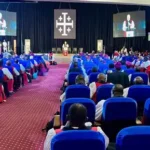
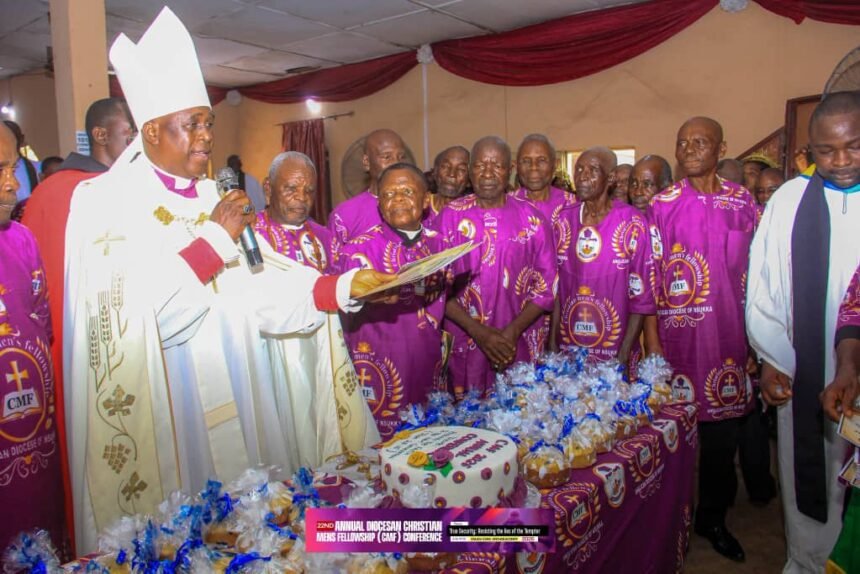
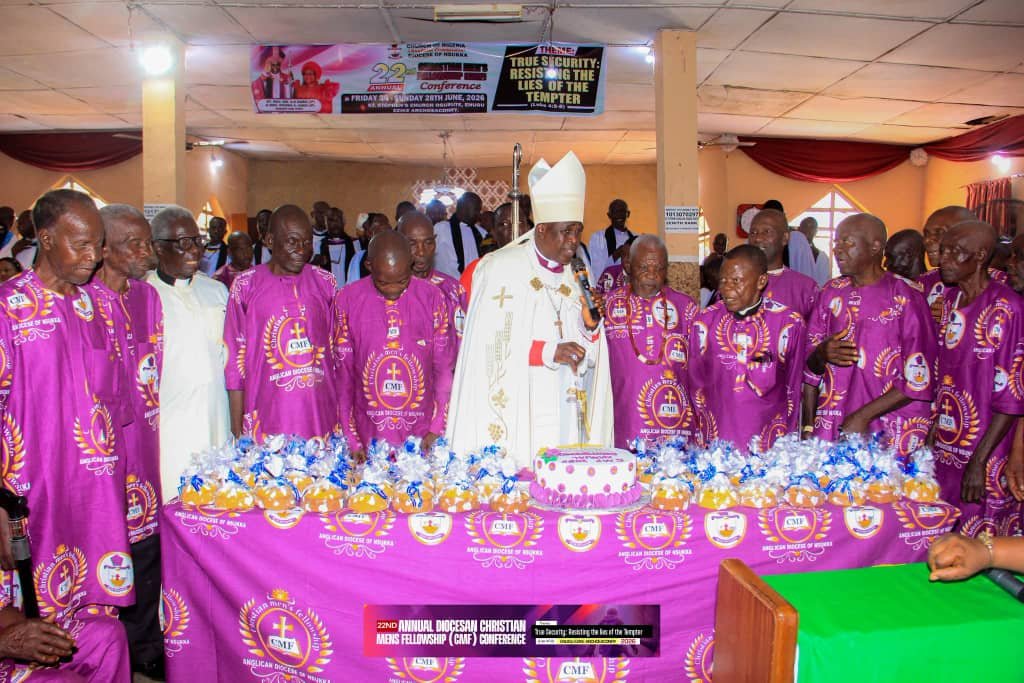
The 22nd Annual Diocesan Conference of the Christian Men’s Fellowship (CMF) of the Anglican Diocese of Nsukka was held at St. Stephen’s Church, Ogurute, from Friday, 26th to Sunday, 28th June 2026, under the theme, “True Security: Resisting the Lies of the Tempter” (Luke 4:5–8).
The Conference brought together Christian men, clergy, Church leaders, and other participants for worship, biblical teaching, prayer, fellowship, reflection, and deliberation on matters affecting the Church and society.
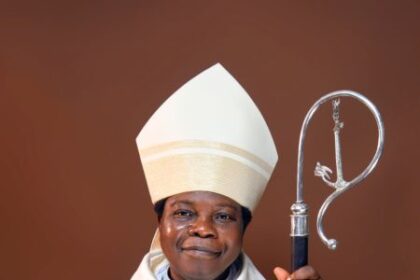
The Conference was presided over by the Lord Bishop of the Anglican Diocese of Nsukka and President of the Christian Men’s Fellowship, the Rt. Rev. Dr. Aloysius Eze Agbo.
Having reflected prayerfully on the Conference theme and considered contemporary challenges confronting families, communities, the Church, and the Nigerian nation, the Conference issues the following communiqué:
1. TRUE SECURITY AND THE CHALLENGE OF FALSE ALTERNATIVES
The Conference affirms that true and lasting security is ultimately found in Almighty God and calls upon Christians and all people of goodwill to resist the temptation to pursue security, prosperity, power, and success through occult practices, ritualism, idolatry, criminality, corruption, or other unethical means.
The Conference observes that fear, desperation, materialism, and the desire for instant success have increasingly exposed individuals, especially young people, to deceptive promises of protection, wealth, and influence.
It therefore calls upon the Church to deepen biblical teaching and intentional discipleship and urges families to provide strong spiritual and moral formation capable of helping young people resist destructive influences.
2. NATIONAL INSECURITY AND THE PROTECTION OF LIVES AND PROPERTY
The Conference expresses grave concern over the persistent insecurity across Nigeria, manifested in insurgency, terrorism, banditry, kidnapping, ritual killings, violent criminality, and other threats to lives and property.
The Conference notes that prolonged insecurity undermines economic development, disrupts communities, creates fear and displacement, and weakens citizens’ confidence in public institutions.
It therefore calls upon the Federal and State Governments and all relevant security agencies to discharge their constitutional responsibilities with greater urgency, professionalism, coordination, fairness, and accountability.
The Conference further urges government to address underlying factors that contribute to insecurity, including unemployment, poverty, social exclusion, injustice, proliferation of arms, and the erosion of confidence in public institutions.
3. YOUTH, CULTURAL IDENTITY, AND THE “BACK-TO-THE-ROOTS” MOVEMENT
The Conference expresses concern over the increasing attraction of some young people to idolatry, occult practices, and the revival of abandoned deities under the banner of cultural rediscovery or “returning to the roots.”
The Conference recognises and affirms the importance of preserving the positive dimensions of Igbo and African cultural heritage, particularly values that promote communal solidarity, respect for human dignity, family responsibility, hospitality, peace, hard work, and social harmony.
However, the Conference rejects the assumption that recovering cultural identity necessarily requires a return to idolatry or practices incompatible with the Christian faith.
The Conference calls upon the Church, families, traditional rulers, educational institutions, community leaders, and cultural organisations to work together in helping young people develop a healthy appreciation of their cultural heritage while providing them with sound moral and spiritual formation.
4. FAMILY UNITY AND THE DANGERS OF SPIRITUAL MANIPULATION
The Conference expresses deep concern over the increasing number of families being divided by unverified prophecies, spiritual accusations, and teachings that arbitrarily attribute sickness, infertility, business failure, delayed marriage, death, or other misfortunes to parents, siblings, relatives, and other family members.
The Conference condemns every form of spiritual manipulation that exploits fear, promotes suspicion, destroys family relationships, or subjects vulnerable persons to financial, psychological, or spiritual exploitation.
It calls upon Christian leaders to exercise responsible pastoral ministry grounded in Scripture, truth, compassion, and accountability and urges Christians to exercise biblical discernment and reject ministries that thrive on fear, manipulation, and family division.
5. COMMUNITY LEADERSHIP AND GOOD GOVERNANCE
The Conference expresses concern over the appointment, selection, or election of persons into positions of community and public leadership primarily on the basis of political patronage, personal connections, wealth, or social status, without adequate consideration of competence, integrity, character, and capacity.
The Conference calls for a renewed culture of leadership founded upon integrity, accountability, competence, experience, wisdom, fairness, acceptability, and genuine commitment to the common good.
It urges communities, political institutions, and appointing authorities to prioritise merit and character in leadership selection and to hold leaders accountable for the responsible exercise of authority.
6. CORRUPTION, PUBLIC ETHICS, AND ACCOUNTABILITY
The Conference identifies corruption as one of the major threats to Nigeria’s moral, economic, and institutional development.
It calls upon government officials, public servants, business leaders, religious leaders, professionals, and citizens to reject corruption in all its forms and embrace a culture of honesty, transparency, justice, accountability, and responsible stewardship.
The Conference particularly calls upon Christians in positions of public responsibility to demonstrate the values of their faith through exemplary conduct and ethical leadership.
7. PUBLIC HONOURS, TITLES, AND THE CULTURE OF MATERIALISM
The Conference expresses concern over the increasing tendency in some sections of society to equate material wealth with moral worth, social importance, and qualification for public honours and recognition.
The Conference cautions that when honours and titles are conferred primarily on the basis of wealth, financial influence, or material display, society risks promoting materialism while diminishing the value of integrity, competence, scholarship, professionalism, sacrifice, and service.
It therefore calls upon the Church, traditional institutions, professional organisations, community bodies, and other institutions responsible for public recognition to promote a merit- and value-based culture in which character, integrity, excellence, competence, selfless service, and positive contributions to humanity are appropriately recognised.
8. ECONOMIC HARDSHIP, “ELITE POVERTY,” AND PROFESSIONALISM
The Conference expresses serious concern over the worsening economic hardship affecting Nigerians and particularly notes the progressive economic weakening of professionals, intellectuals, skilled workers, and the productive middle class—a phenomenon increasingly reflected in declining purchasing power and diminishing economic security.
The Conference observes that persistent inflation, currency depreciation, inadequate remuneration, unemployment, and unfavourable economic conditions are eroding the dignity of labour and weakening the capacity of many professionals to maintain a reasonable standard of living.
It further expresses concern over situations in which mediocrity, patronage, and political favouritism are elevated above competence, expertise, merit, and professionalism.
The Conference calls upon governments and employers to pursue economic and labour policies that promote fair remuneration, reward productivity, protect the dignity of labour, recognise expertise, and create opportunities for sustainable employment and professional development.
9. CHURCH–COMMUNITY PARTNERSHIP FOR PEACE AND DEVELOPMENT
The Conference affirms the importance of constructive engagement between the Church, traditional institutions, community leaders, civil society, and government in addressing the challenges confronting society.
It encourages collaboration in promoting peace, security, youth development, education, moral formation, cultural values that enhance human dignity, and sustainable community development.
Such partnerships, the Conference maintains, should be founded upon mutual respect, justice, accountability, and commitment to the common good.
10. A CALL TO CHRISTIAN MEN
The Conference calls upon Christian men to rise to their responsibilities as disciples of Jesus Christ, husbands, fathers, mentors, leaders, professionals, and responsible members of society.
Christian men are urged to provide godly leadership in their homes, model integrity in their workplaces, mentor the younger generation, defend the vulnerable, pursue peace, resist corruption, and demonstrate through their lives that genuine security is not found in wealth, political influence, occult power, or social status, but ultimately in God.
CONCLUSION
The 22nd Annual Diocesan Christian Men’s Fellowship Conference of the Anglican Diocese of Nsukka reaffirms its commitment to the proclamation of the Gospel of Jesus Christ, intentional discipleship, the strengthening of Christian families, the moral and spiritual formation of the younger generation, responsible leadership, justice, peace, and the transformation of society.
The Conference calls upon the Church to remain faithful to its prophetic responsibility of speaking truth, defending human dignity, promoting justice, and offering hope to society.
It calls upon government at all levels to prioritise the security and welfare of citizens, uphold justice and the rule of law, promote economic policies that enhance human flourishing, and provide accountable leadership.
It calls upon traditional and community institutions to promote peace, unity, cultural values that uphold human dignity, and responsible leadership.
Above all, the Conference calls upon all people to reject the deceptive promise of security without God and to embrace the truth that enduring security, peace, and hope are ultimately found in Almighty God.
Issued at St. Stephen’s Church, Ogurute, on Sunday, 28th June 2026.
Rt. Rev. Dr. Aloysius Eze Agbo Ven. Prof. Ikem Okoye
Diocesan Bishop & President, CMF Chaplain, CMF
Sir Robert Agbo Mz. Prof. Chuma O. Okeke
Chairman, CMF Chairman, Communiqué Committee