
I am grateful for the irenic article that the Rev. Dr. Matthew Olver published on Covenant on April 13, 2026, where he engages theologically with the Abuja Affirmation.
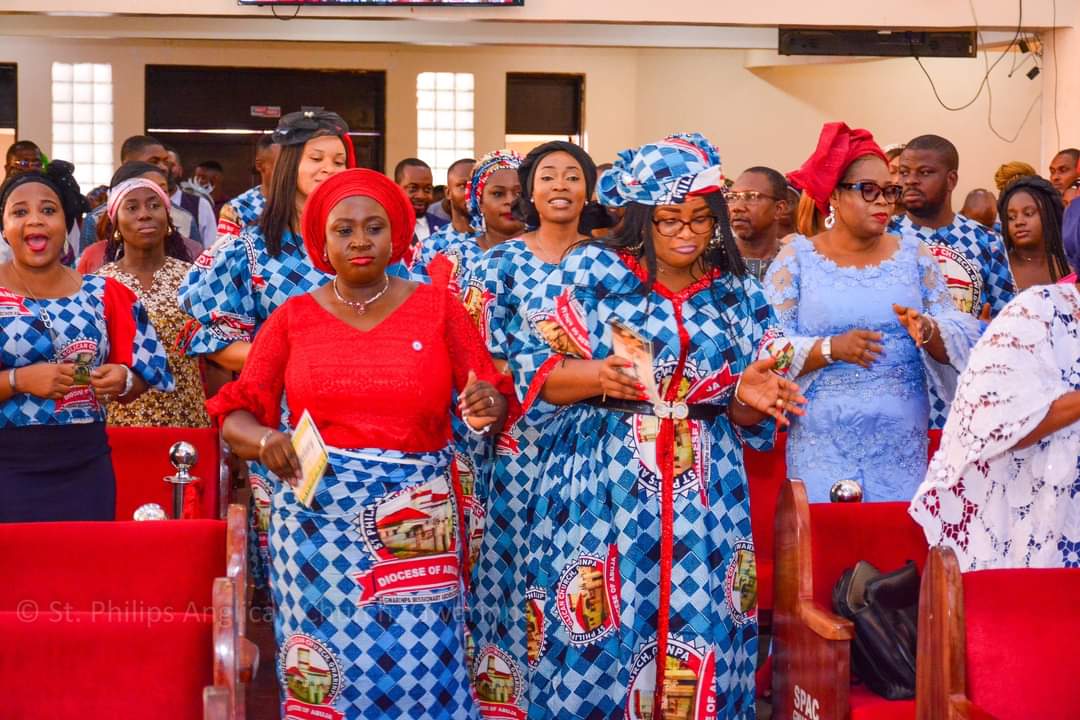
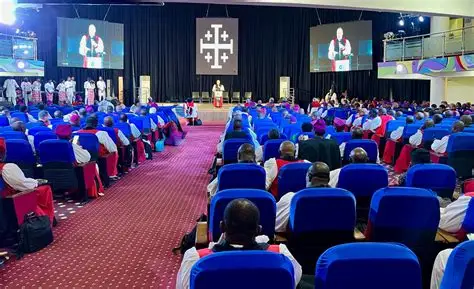
As a participant in the G26 Assembly in Abuja in March, I have a good idea of what was achieved in that extraordinary gathering, which was a celebration of the Global Anglican Communion launched by the Gafcon primates on October 16, 2025.
The heart of the issue that Gafcon has been addressing since its 2008 inaugural assembly in Jerusalem is the authority of Scripture in its plain, canonical sense.
Dr. Olver’s article begins with a commendation of the theological position of the Abuja Affirmation, which is grounded in Holy Scripture and the Reformation Formularies. He also rightly observes that the Abuja Affirmation recognizes that not all Christians (let alone Anglicans) agree on the interpretation of Scripture. Olver cites women’s ordination as an example of adiaphora, upon which we can agree to disagree while remaining in fellowship with one another. The Jerusalem Declaration (2008), which has become a contemporary definition of Anglican identity for 80 percent of the world’s Anglicans, expresses this reality:
- We celebrate the God-given diversity among us which enriches our global fellowship, and we acknowledge freedom in secondary matters. We pledge to work together to seek the mind of Christ on issues that divide us.
However, freedom in secondary matters does not suggest there is freedom in primary matters, namely those matters that affect the meaning of the gospel and the salvation of souls. This is the gist of the dual importance of unity and truth (John 17:11, 17, 19).
Secondary matters, while often referred to as adiaphora, are better described as matters that do not affect one’s salvation, However, adiaphora usually describe matters that are morally neutral: “things indifferent.” Many would not consider women’s ordination as morally neutral, as there are strongly held arguments for the moral imperative of ordaining women, as there are for the opposite view. Moreover, several provinces affirm the ordination of women as deacons while disallowing their ordination as priests. However, proponents of neither position would declare the matter as affecting one’s salvation. Hence the Jerusalem Declaration rightly refers to secondary matters, about which full agreement has not yet been reached. Yet among all who affirm the Jerusalem Declaration there is a unanimous view that primary matters, which affect salvation, are not to be compromised.
While it is true that different hermeneutical approaches to the interpretation of Scripture abound, more often than not it is the subtle influence of the surrounding culture that so easily deflects us from ignoring Scripture’s admonition: “Remove not the ancient landmarks that your fathers have set” (Prov. 22:28). The ease with which the Israelites were so quickly beguiled and defiled by the pagan gods of Canaan once they entered the promised land is a warning to us all. The prophets would often describe the idolatry of Israel as sexual unfaithfulness (Hos. 2:2–13; cf Jer. 3:6–9; 13:27; Ezek. 16; 23). It would be naïve in the extreme to consider such immorality as secondary, let alone adiaphora.
The sexual revolution of the 1960s sought to normalize sexual promiscuity and homosexual behavior, yet it is hard to see how these expressions of porneia (πορνεία) are in any way countenanced by Scripture. Olver is correct in asserting, “The logic of the decision to reorder the Anglican Communion is that the affirmation of same-sex marriage and sexual activity is a rejection of the authority of Scripture, full stop.”
Yet the leaders of the Global South have been saying this not just since 2003, when Gene Robinson was consecrated, as Olver suggests, but at least as far back as 1997, when the Kuala Lumpur Statement was published, which was the impetus for Resolution I.10 of the 1998 Lambeth Conference.
Moreover, the matter of sexual immorality, which was the presenting issue of Resolution I.10, is clearly a matter of first order. Despite the obfuscation of the revisionists, the apostle Paul’s warning to the Corinthians continues to be a warning to us all that the sexually immoral will not inherit the kingdom of God:
Or do you not know that wrongdoers will not inherit the kingdom of God? Do not be deceived: Neither the sexually immoral nor idolaters nor adulterers nor men who have sex with men nor thieves nor the greedy nor drunkards nor slanderers nor swindlers will inherit the kingdom of God. (1 Cor. 6:9–10 NIV)
The Greek word porneia and its cognates occur over fifty times in the New Testament and comprise all forms of sexual immorality, including homosexuality, which the apostle specifically mentions in verse 10, with respect to the passive and active participants (μαλακοὶ καὶ ἀρσενοκοῖται, malakoi kai arsenokoitai). The words of Paul are reinforced by the final recorded words of the risen Lord Jesus, who declares the sexually immoral (πόρνοι, pornoi) are prevented from entering the celestial city (Rev. 22:15).
What the revisionists declare to be adiaphora, Anglicans since the Reformation, and the people of God under both testamental eras consider to be a first-order issue—an issue affecting one’s salvation. It is not an issue for compromise, nor for “walking together,” as Archbishop Justin Welby declared after the 2022 Lambeth Conference, when he asserted that one can hold the traditional view (expressed in the 1998 Resolution I.10) or a revisionist view (which accepts the blessing of same-sex couples or celebrates same-sex marriage) and be considered faithful Anglicans. The prophet Amos clearly disagrees: “Do two walk together unless they are agreed to do so?” (Amos 5:1).
Gafcon cannot walk together with those who undermine the teaching of Scripture on matters of salvation. For this reason, they have reordered the Anglican Communion.
Scripture Is Its Own Interpreter
Dr. Olver is critical of the Abuja Affirmation when it asserts “Scripture is its own interpreter.” Apparently, he is using a different definition of “Scripture interprets Scripture” than the way that the Abuja Affirmation uses the phrase. It is not an affirmation of nuda Scriptura, Scripture stripped of theological tradition, but a reflection of the language of Article xx and the Homilies. In citing Article xx, the Abuja Affirmation is relying upon the words, “And yet it is not lawful for the Church to ordain any thing that is contrary to God’s Word written, neither may it so expound one place of Scripture, that it be repugnant to another.”
Similarly, in Cranmer’s first Homily, “A Fruitful Exhortation to the Reading and Knowledge of Holy Scripture” (which Article xxxv declares to be “good and wholesome Doctrine”), Cranmer declares, “And although many things in the Scripture be spoke in obscure mysteries, yet there is nothing spoken under dark mysteries in one place but the selfsame thing in other places is spoken more familiarly and plainly.”
Cranmer considered that the Scripture needed to be read holistically, as one passage assists in interpreting another. This is what the Abuja Affirmation affirms in its phrase “Scripture is its own interpreter.” Cranmer was not alone in defending this principle, as William Whitaker’s An Answer to the Ten Reasons of Edmund Campion the Jesuit (1606) confirms.
Now, Campion, since you know that this is the manner of your Church in the interpreting of the Scripture, than which what can be more corrupt, how dare you presume to reprehend our manner of interpretation? But we follow no other course then that which the Fathers have prescribed, and which the thing it selfe argues to be most fit. For that is our course which Augustine advised: we interpret obscure places by those which are plainer, we observe the phrase and stiyle of the Scripture, we weigh circumstances, we compare scripture with scripture, we go not one iota from the Analogie of faith. They who take this course, adorning their hearty prayers, that the Lord would open this sealed booke unto them; and teach them the true sense of the scripture, shall never need to run to Rome, and enquire of that sacred Oracle of the Pope, who himself neither understandeth the true sense of scripture, neither is able to expound them to others.” (p. 62)
However, this does not suggest that Anglicans read the Bible individualistically or without reference to the history of interpretation. As paragraph 2 of the Jerusalem Declaration asserts, “We believe the Holy Scriptures of the Old and New Testaments to be the Word of God written and to contain all things necessary for salvation. The Bible is to be translated, read, preached, taught and obeyed in its plain and canonical sense, respectful of the church’s historic and consensual reading.”
While it is agreed that the Church has “authority in controversies of Faith,” yet as a “keeper of Holy Writ” it must compare Scripture with Scripture (Article xx), and as our Reformers exemplified, respect “the church’s historic and consensual reading.”
Why Not Continue the Dialogue and Walk Together?
By way of contrast, Dr. Olver commends the approach which “has been to articulate clearly and with charity the places of theological disagreement without a formal, ecclesiological rupture. Each has sought in their own ways various, concrete ways to intensify the bonds of communion with all those who share the widest possible unity of faith and doctrine.”
However, what seems to escape his attention is that our Anglican DNA is shaped by the Reformation, when the Church of England broke with the Church of Rome over doctrinal disagreements. After the death of Henry VIII, Thomas Cranmer immediately set about reforming the Church of England with the first and second English prayer books, along with the Homilies and the 42 Articles of Religion (later to become the 39 Articles in the reign of Elizabeth), which expressed a reformed understanding of the Bible’s teaching on salvation.
Bishop Jewel’s Apology of the Church of England (1562) eloquently defends the reasons for the break with Rome in order to reform the one, holy, catholic, and apostolic Church. Gafcon has followed in the footsteps as Cranmer and the English Reformers, so it is very difficult to admonish the leadership of Gafcon for an “ecclesiological rupture” when such was the defining feature of the reformed Church of England (Anglicanism) in the 16th century. Few Christian historians or theologians would argue that Cranmer should have kept the dialogue open with Rome and, in Olver’s words, “intensify the bonds of communion with all those who share the widest possible unity of faith and doctrine.”
While the Nairobi-Cairo Proposals promoted by the Inter-Anglican Standing Commission on Unity, Faith and Order (IASCUFO) seek to apply similar ecumenical language to the current disputes over human sexuality by seeking to maintain the highest level of communion possible, such a process only works with those who share the same gospel. Ecumenical relations with Protestant churches are based upon a shared understanding of salvation. Yet what appears to have eluded the authors of the Nairobi-Cairo Proposals is that the revisionists do not share the same gospel or the same understanding of Scripture as those who continue in the theological trajectory of the English Reformation. This prevents our walking together.
Nonetheless, the Abuja Affirmation acknowledges that some faithful Anglicans choose to remain in their revisionist dioceses in order to continue to stand for the truth, recognizing that communion with their bishops is gravely impaired, preventing any meaningful fellowship.
Structures and Discipline
Dr. Olver decries the Abuja Affirmation’s abandonment of institutional structures, such as the so-called Instruments of Communion (a twenty-first century term that modified the phrase “Instruments of Unity” as first described in the Virginia Report of 1997).
He claims that “the prayer book and the ordinal assume and provide for a quite substantive collection of ‘institutional structures,’ including the Archbishop of Canterbury.” This is a curious and unsubstantiated claim with regard to the Archbishop of Canterbury. While it is true that the Ordinal has a special place for the archbishop (or some other bishop appointed by him) in the consecration of a bishop, it does not refer to the Archbishop of Canterbury by name or title, since there are two archbishops in England, namely York and Canterbury. Clearly, the references to the archbishop only pertain to consecrations in the Church of England; neither does the Prayer Book envisage that the Archbishop of Canterbury is anything like an Instrument of Communion, as the office has been described over the past twenty-five years.
Dr. Olver’s accompanying claim that since the Global Anglican Communion has abandoned the structures of the Canterbury Communion, that implies that Gafcon considers structures are unnecessary. By contrast, the Abuja Affirmation declares that structures must be consistent with the Scriptures and the Reformation Formularies. For this reason, the requirement of assent to the Jerusalem Declaration addresses this question, as does the formation of the Global Anglican Council and the supporting Secretariat.
On the question of discipline, Olver declares: “If each province is autonomous, how could the Instruments of Communion have enforced ‘the doctrine and discipline of the Anglican Communion’”? This is an important question, with which I conclude.
While it is true that autonomous provinces cannot be disciplined by any body external to each province, let alone the Instruments of Communion, the Archbishop of Canterbury does have the power of exclusion. Thus, for over 150 years, successive archbishops of Canterbury have declined to invite bishops from the Church of England in South Africa (now REACH-SA) to the Lambeth Conference. Is this not a form of discipline? Likewise, Rowan Williams declined to invite Bishop Gene Robinson and Bishop Martyn Minns to the 2008 Lambeth Conference. Even more extraordinary was the action of Justin Welby to decline to invite the spouses of bishops in same-sex unions, on the grounds that this was a breach of Resolution I.10, notwithstanding the glaring inconsistency of inviting bishops in same-sex unions who were in direct defiance of Resolution I.10.
One might also remember that the 2016 Primates’ Meeting excluded the Episcopal Church (TEC) from participation in certain Anglican bodies, including the Anglican Consultative Council (ACC), when TEC changed its canons to solemnize same-sex marriages in blatant opposition to the doctrine of marriage in the BCP. However, this “discipline” was ineffective. The Abuja Affirmation is therefore correct in declaring the ineffectiveness of the Instruments of Communion to uphold the discipline of Christ as outlined in Matthew 18, as have bishops across the Communion who have consistently denied their consecration vows as expressed in the Ordinal: “Be you ready, with all faithful diligence, to banish and drive away all erroneous and strange doctrine contrary to God’s Word; and both privately and openly to call upon and encourage others in the same?”
Sadly, many have not been ready, despite their affirmation in response to this question.
Our Anglican Communion desperately needed to be reordered along the lines of our 16th-century forebears, grounded in the teaching of Christ and his apostles. To continue in fellowship with those who have endorsed and celebrated teaching that is contrary to God’s Word would be to deny the very truths that the Scriptures endorse: “Avoid such people” (2 Tim. 3:5; cf Rom. 16:17–18; Titus 3:10–11).
This is why the assembly of bishops, clergy, and laity meeting in Nigeria in March 2026 unanimously endorsed the Abuja Affirmation and extended an invitation to all faithful Anglicans to join them in the reordered Anglican Communion.
Glenn Davies