
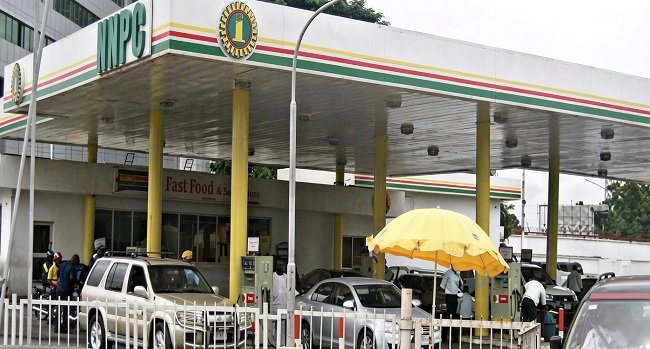
The Federal Government has announced a 30-day discount on petrol sold by the Nigerian National Petroleum Company Limited (NNPC), with priority given to public transport operators nationwide.
The Minister of Finance and Coordinating Minister of the Economy, Taiwo Oyedele, disclosed this on Thursday during a press briefing on fuel prices and subsidy related issues in Abuja.
Oyedele explained that the arrangement was not a return to fuel subsidy but a temporary measure to sell petrol at cost and ease the impact of rising fuel and transportation expenses on households and businesses.
“We are offering a discount on petrol dispensed by NNPC Limited for the next 30 days in the first instance, with priority for public transporters nationwide. So, it’s not a subsidy; government is just saying we sell to you at cost,” he said.
The minister also disclosed that the government was negotiating a ceiling of ₦1,350 per litre on the ex-gantry or landing cost of petrol under a proposed price modulation mechanism.
He clarified that the proposed ceiling did not mean petrol would sell for ₦1,350 per litre at filling stations. Rather, it was intended to reduce the immediate impact of fluctuations in global crude oil prices and foreign exchange rates on domestic petrol prices.
Oyedele said the government was considering additional measures because existing interventions had not sufficiently eased the financial pressure on households and businesses.
According to him, the proposed mechanism would allow refiners and importers to initially bear any shortfall when costs exceed the agreed ceiling, with the difference recovered later when market conditions improve.
He maintained that the arrangement was neither a subsidy nor price control but a strategy to moderate price fluctuations and provide greater stability for consumers.
“Pump prices should not have to follow every swing in global crude or the exchange rate. The government is negotiating a ceiling of ₦1,350 a litre on the ex-gantry or landing cost of petrol to keep pump prices stable,” he said.
The minister argued that maintaining relatively stable prices would help reduce uncertainty for businesses and consumers, noting that sharp increases in fuel prices often place additional pressure on transportation and the cost of living.
He added that the proposed ceiling would be reviewed monthly, with the figures published to promote transparency.