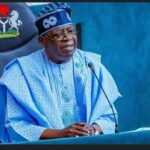


The Group Chief Executive Officer of the Nigerian National Petroleum Company Limited (NNPC Ltd), Engineer Bayo Ojulari, has explained the reasons why operations of the Nigeria’s government-owned refineries were stopped.
Nigeria currently has four refineries, two located in Port Harcourt, and one each in Warri and Kaduna. Together, the facilities have a combined installed capacity of 445,000 barrels per day. The Port Harcourt refineries account for 210,000 barrels per day, while the Warri and Kaduna refineries have capacities of 125,000 and 110,000 barrels per day respectively.
Speaking on the sidelines of the 9th Nigeria International Energy Summit (NIES 2026), Ojulari said the decision to stop operations was taken because the refineries were no longer commercially viable in their current state.
According to him, the fact that they were crude oil supplies did not help the cause of the refineries as they were operating between 50 and 55 percent, which was not enough.
Ojulari noted that operating costs continued to rise, while the quality of refined products remained low, resulting in significant financial losses for the country.
“The first thing that became clear is that we were running at a monumental loss to Nigeria. We were just wasting money. So the first decision that I had to make was to stop the rot and first of all calibrate quickly, rebate to see what we can do.
“We are pumping cargo every month into the refineries. Utilisation of those cargoes was maybe like 55 and 50 percent. That cargo is valued a lot.
“We are spending a lot of money in the operations, a lot of money in the contractors, but if you then look at the net, we’re just leaking away a lot of value and there was no clarity on what’s the plan to turn that loss into positive,” Ojulari said.
Ojulari further disclosed that NNPC plans to open up parts of its equity to global investors willing to make long-term commitments, stressing that the move is aimed at ensuring sustainability rather than selling off national assets.
“We are not selling Nigeria. However, we are open to divesting some equity where necessary to ensure sustainability. Our goal is to establish a structure where the refinery can fund itself and operate as a proper commercial business,” he stated.