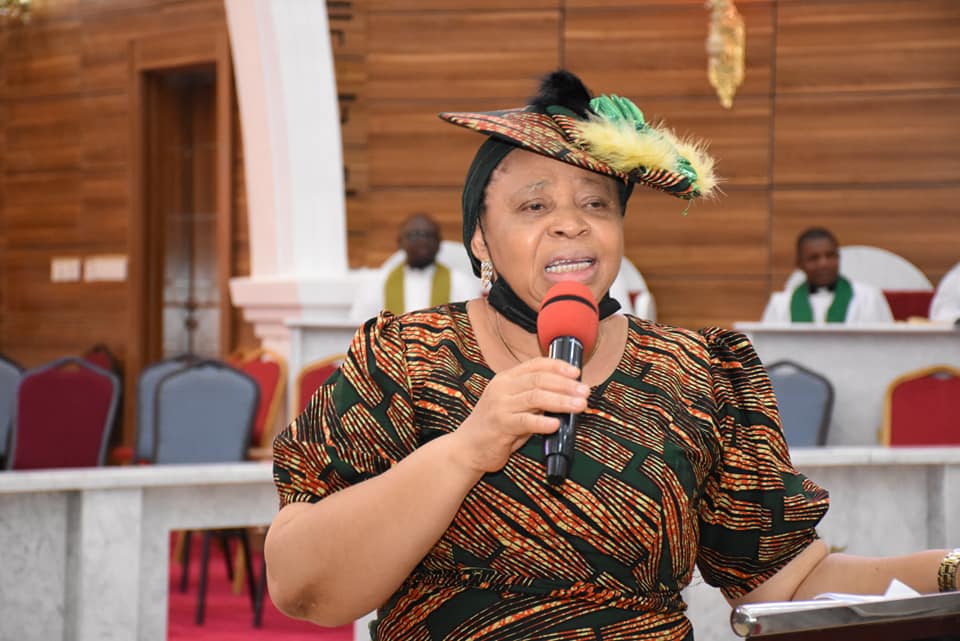

The wife of the Archbishop, Metropolitan, and Primate of All Nigeria, Mrs. Angela Eberechukwu Ndukuba, has laid out a nine-point pathway for safeguarding the sanctity of the Church.
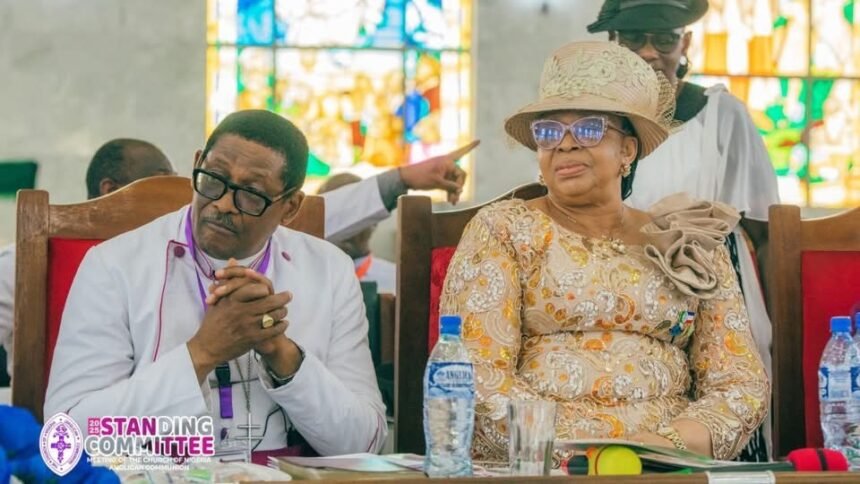
This was contained in her Presidential Address to the Women of the Church of Nigeria (Anglican Communion) on Wednesday, September 17, at the Cathedral Church of Emmanuel, Okesa, Ado-Ekiti, during the second edition of the Standing Committee Meeting of the Church of Nigeria (Anglican Communion) hosted by the Diocese of Ekiti.
In her address, Mrs. Ndukuba emphasized that the Church in Nigeria, faced with moral, doctrinal, and cultural challenges, must rise to defend the faith “once delivered to the saints” (Jude 3).
She outlined the following nine pathways for contending for the sanctity and integrity of the Church:
- Spiritual Purity: Sanctity requires obedience to God’s Word and freedom from sin (1 Corinthians 6:19-20). In Joshua 7, Achan’s hidden sin defiled the entire community, illustrating the corporate impact of individual disobedience.
- Sacred Purpose: The church exists to glorify God and advance His kingdom (Matthew 28:19-20). Ephesians 5:27 envisions the church as radiant in holiness, while Joshua 7 shows that sanctity is essential for mission fulfillment
- Corporate Holiness: The church’s sanctity is communal, as seen in Joshua 7:11, where Achan’s sin affected all Israel, and in 1 Corinthians 12:26, where one member’s actions impact the whole body. Christians should strive to live a life of holiness and righteousness, reflecting the glory of God.
- Doctrinal Defense: Contending involves safeguarding core Christian truths (e.g., Christ’s deity, salvation by grace) against distortion. Ephesians 5:26 emphasizes the Word’s role in sanctification, requiring fidelity to Scripture.
- Moral Integrity: As Joshua confronted Achan, the church must address sin through discipline, aiming for repentance and restoration (Matthew 18:15-17). Christians should be vigilant and discerning, guarding against false teaching and sin.
- Cultural Engagement: Contending means resisting worldly values and idolatry (Romans 12:2) while engaging society with truth and love, as Paul modeled in Athens (Acts 17:22-31).
- Holiness as Witness: The church’s sanctity authenticates its testimony. Jesus said, “By this all people will know that you are my disciples, if you have love for one another” (John 13:35). Achan’s sin in Joshua 7 dimmed Israel’s witness, requiring restoration.
- Proclamation and Action: Witness involves preaching the gospel (Romans 10:14-15) and living it out through good deeds (Matthew 5:16). The early church’s unity and generosity were a powerful testimony (Acts 4:32-35).
- Global Mission: The church’s witness extends to all nations, fulfilling God’s redemptive plan (Acts 1:8). To do this effectively, Christians must study the Bible regularly, seeking to understand its teachings and apply them to their lives.
Conclusion
Mrs. Ndukuba concluded that for the Church of Nigeria—and indeed the global Church—to remain faithful in an age of competing voices, it must uphold sanctity through purity, doctrinal fidelity, moral courage, and missional zeal. By walking this nine-point pathway, the Church will continue to shine as a holy, radiant bride prepared for her Lord (Ephesians 5:27).