
The choice of the above caption was intentional, because it has become obvious that some Nigerians dread the word SUBSIDY, as they perceive it from different prisms. They are entitled to their viewpoints since one’s viewpoint is what one perceives from where one is standing. But at the end of the day, we all know, as the sage admonishes us, that the taller the tree the farther it sees.
However, it is important that we approach this topical subsidy issue from the same page, so that such a discourse is predicated on facts and informed knowledge. In its simplest meaning the term subsidy stands for an incentive, usually in the form of financial assistance by government, to lower the price of goods and services for the citizenry.
In sharp contrast is the term TAXATION which refers to government legally collecting mandatory money from individuals and businesses for public goods and services. Subsidy can also be applied to taxation in the form of TAX WAIVERS for certain goods and services. With this basic knowledge we must come to the understanding that subsidy can be applied in varying forms and purposes. In the US for example, farmers are known to have been granted subsidies by government. In the UK, health services have received subsidies from the government for the benefit of the citizens. Here in Nigeria, the term subsidy is in a Siamese-twin relationship with PETROLEUM PRODUCTS PRICING. This write-up is therefore targeted at x-raying subsidy regimes in Nigeria with regard to petroleum products management and marketing. Prior to the discovery and production of petroleum oil and gas in the late 50s in Nigeria and the establishment of the first local refinery in 1965 in Alasa Eleme, [Port Harcourt], by Shell BP, petroleum products were imported and market forces determined the pricing.
In the late 70s and early 80s the Nigeria government had established its own three refineries [Port Harcourt, Warri and Kaduna] in addition to acquiring the earlier 1965 refinery. This became the genesis of a revised petroleum products management and marketing system in Nigeria. It was believed, and rightly so, that with our rich endowment in petroleum resources, Nigerians should enjoy this status by way of having lower prices of petroleum products than the less endowed nations of the world. Government then began to fix the prices of products and enforced national uniform price regime, which was reviewed from time to time based on the international crude pricing and refining process costs.
This was how the government introduced the PETROLEUM EQUALISATION FUND [PEF] to absorb the cost differential in moving products to all parts of the country. This is SUBSIDY. Again, when crude oil was going for $18 per barrel as at about 1998/1999, the NNPC was being supplied at $9 a barrel [50% of international cost], so as to reduce the price of products for the citizens. This is SUBSIDY. When the crisscrossing pipeline networks for the distribution of petroleum products came under incessant vandalism and the government resorted to products movement via land transportation with trucks, known as BRIDGING, the government was equally paying per liter of product so transported to the NNPC depots. This is SUBSIDY. I can recall that by 2000, when the civilian regime had settled down, the 50% concession granted to the NNPC in crude oil supply costs was withdrawn and the NNPC began to pay international price. This reflected in the increase in the cost of products, naturally. Gradually, our poor maintenance culture of facilities led to the comatose status of the 4 refineries and the reliance on petroleum products importation.
The landing costs of the products became huge and the government weighed in to offer affordable prices to the citizenry, which created a large gaping hole in the national economy: EFFECT OF SUBSIDY, which culminated in the quest for SUBSIDY REMOVAL, and a dreaded NO-GO area by any government in power. But truth must be told: APPOINTED PETROLEUM PRODUCTS IMPORTERS SAW A HUGE OPPORTUNITY TO INFLATE VOLUMES AND COSTS, thereby impacting more damage to the national economy and the subsidy regimen. It is therefore obvious that mismanagement of products importation and the moribund nature of all 4 refineries must be held accountable for SUBSIDY ABUSE. Therefore, any government that can fix our 4 refineries will succeed in ENSURING AFFORDABLE and AVAILABLE petroleum products for the citizenry, and extra for export, irrespective of the presence of private refineries in the country. SUBSIDY IS NOT A CURSE-WORD, Nigerians must reap the benefits of being endowed with petroleum resources by mother-nature. Just my view. Thank you.
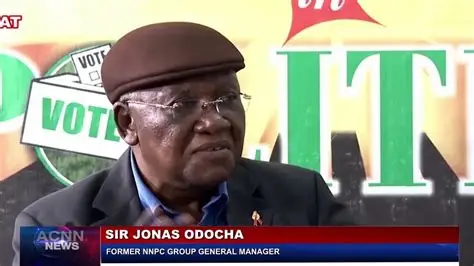
Jonas Odocha.
Abuja. August 24, 2026.