

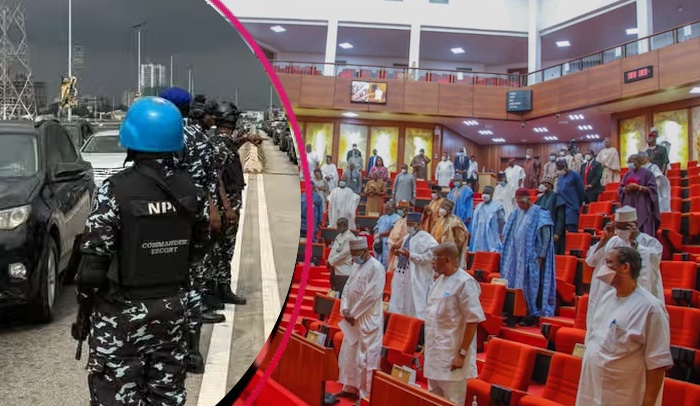
Civil society organisations (CSOs) have called on the Senate to speed up consideration and passage of the proposed state police bill, describing it as a critical step towards addressing Nigeria’s growing security challenges.
The appeal followed the announcement by Senate President Godswill Akpabio that President Bola Tinubu had forwarded a Constitution Alteration Bill seeking the establishment of state police across the country.
The proposed legislation aims to amend the 1999 Constitution to allow the creation of state-controlled police forces alongside the existing Nigeria Police Force, giving state governments a greater role in maintaining security.
Speaking on the development, President of the Committee for the Defence of Human Rights (CDHR), Debo Adeniran, expressed optimism that the bill would strengthen efforts to tackle insecurity if passed into law.
According to him, state police officers, being familiar with local communities and terrain, would be better positioned to identify and combat criminal activities within their areas.
He added that granting the bill accelerated passage would help address security concerns more effectively and improve law enforcement at the grassroots level.
Similarly, Chairman of the Lagos Chapter of the Civil Liberties Organisation (CLO), Kenny Bakare, said there was widespread public support for state policing, urging lawmakers to act swiftly on the proposal.
Bakare noted that the establishment of state police had become a national demand and should be treated as an urgent matter by the National Assembly.
Also lending his voice, former Chairman of the Nigeria Labour Congress (NLC) in Benue State, Anya Gideon, said the current security situation in the country requires a decentralised policing system.
He argued that local authorities would be better equipped to respond to security threats within their jurisdictions than a centrally controlled police structure.
Gideon further stated that the introduction of state police would place greater responsibility on governors to ensure the safety of residents, particularly given the substantial security votes allocated to states.
The Senate is expected to begin deliberations on the bill as part of ongoing efforts to reform Nigeria’s security architecture and strengthen the country’s response to insecurity.