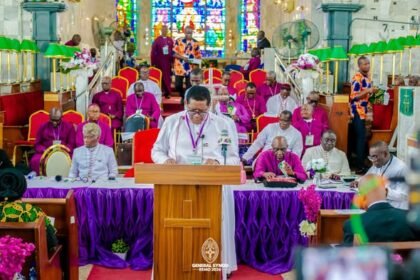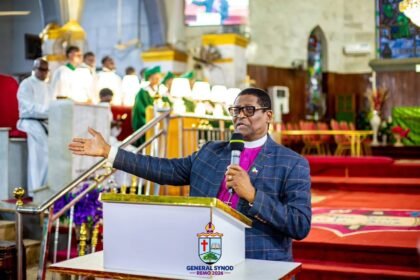

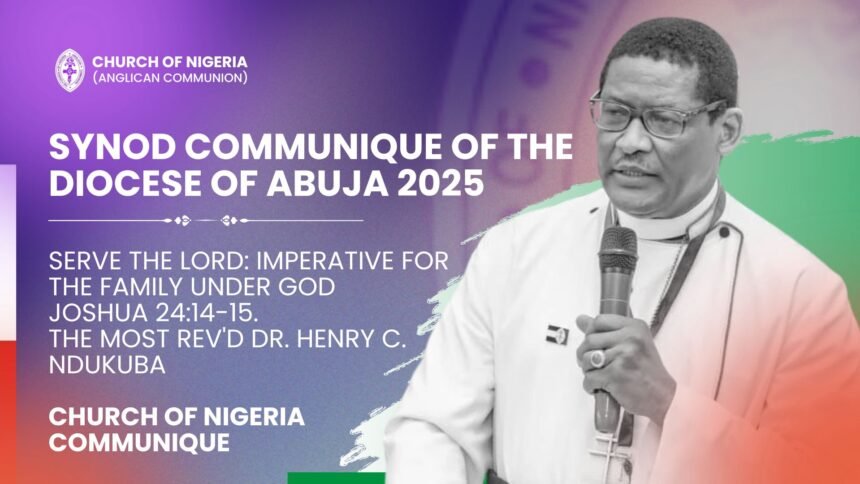
COMMUNIQUÉ ISSUED AT THE THIRD SESSION OF THE TWELFTH SYNOD OF THE DIOCESE OF ABUJA (ANGLICAN COMMUNION), HELD AT ST. PHILLIP’S ANGLICAN CHURCH, TEAM 6, GWARINPA, ABUJA FROM THURSDAY 29TH MAY TO SUNDAY 1ST JUNE, 2025.
PREAMBLE
The Diocese of Abuja, Church of Nigeria (Anglican Communion) held the Third Session of the Twelfth Synod from Thursday, 29th May to Sunday, 1st June, 2025, at St. Phillip’s Anglican Church, Team 6, Gwarinpa, Abuja. The Synod was presided over by the Bishop of the Diocese of Abuja and the Primate of All Nigeria, The Most Rev’d Dr. Henry C. Ndukuba.
Under the guidance of the Holy Spirit, the Synod examined the Theme: “SERVE THE LORD: IMPERATIVE FOR THE FAMILY UNDER GOD”, taken from Joshua 24:14-15. The theme, which highlighted the foundations and practical ways of serving the Lord, also emphasized the need to balance responsibilities, prioritize faith, and ensure spiritual growth and family bonding to attract God’s blessings and glorify His name.
INSECURITY
Synod appreciates the President of the Federal Republic of Nigeria and Commander-In-Chief of the Armed Forces, His Excellency, Bola Ahmed Tinubu, GCFR, for the efforts to tackle the multi-dimensional challenges facing Nigeria in every sector. Synod further commends the spirited efforts of members of the Armed Forces and relevant Paramilitary Agencies to secure our nation, Nigeria.
However, Synod notes with deep concern the persistent and widespread insecurity, including violent attacks in Plateau, Benue, Edo, Enugu, Ondo, and Borno States, and other troubling encroachment of violence in other parts of the country, leading to tragic loss of lives, displacement of communities, and destruction of property.
Synod strongly urges the Federal, State, and Local Governments to adopt more proactive, coordinated, and intelligence-driven approaches to entrenching security. Synod calls for improved welfare and equipment for security personnel, prompt justice for victims, and sincere efforts to address the root causes of insecurity, such as poverty, unemployment, and ethnic-religious tension.
ELECTORAL REFORMS
Synod emphasizes that credible, free, fair, and transparent elections are the bedrock of good governance and national stability. Synod therefore urges the National Assembly, Independent National Electoral Commission (INEC), and other relevant electoral stakeholders to prioritize reforms that will:
Ensure the independence and accountability of the electoral bodies
Promote the use of secure, technology-driven systems for voter registration, accreditation, transmission, and collation of results
Strengthen the legal framework to deter electoral fraud and punish offenders swiftly
Guarantee equal access and a level playing field for all political parties and candidates
Synod further calls on all Nigerians, particularly the Church, to remain vigilant, prayerful, and actively engaged in advocating for transparent electoral processes and the integrity of the outcomes.
GOVERNANCE
Politics
Synod notes with concern the continued emphasis on politics at the expense of governance. Synod notes that while politics may win elections, good governance builds a nation. The purpose of leadership is not to perpetually campaign but to serve, to solve real problems, and to steer society towards development and prosperity.
Synod, therefore, urges leaders at all levels to focus on what truly matters — security, education, healthcare delivery, the provision of infrastructure, job creation, and a sustainable future. Governance must be rooted in servant leadership, vision, and performance-based assessment.
ENVIRONMENTAL STEWARDSHIP AND ILLEGAL MINING
Synod expresses grave concern over escalating environmental degradation across the nation caused by deforestation, oil spillage, waste pollution (especially plastic waste), and the devastating impact of illegal mining activities in parts of the country. These unregulated mining operations and the use of plastic waste not only damage the ecosystems but also fuel insecurity, exploit local communities, and deprive the nation of vital revenue.
Synod calls on the Federal and State Governments to enforce stricter regulations to monitor mining activities and prosecute those involved in illegal mining operations, including their sponsors.
Synod further encourages reforestation and land rehabilitation programs to restore the damaged ecosystems.
Synod commends the commitment of the Federal government to protect the environment with the conversion of petroleum-using cars to Compressed Natural Gas (CNG) ones. Synod, however, is appalled that access to the gas is not available to the end users.
ECONOMY
Synod notes the dwindling economy in Nigeria with the rate of inflation and its multi-dimensional negative consequences on the citizenry, investments, etc.
Synod expresses concern over the high debt profile of the Federal and States Governments with excessive borrowing and decries that these crippling debt-burden have the potentials to erode current and prospective investors’ confidence, particularly foreign ones, resulting in capital flight with its attendant negative impact on the Nigerian stock market and our overall economic stability.
Synod expresses the need for judicious utilization and management of the funds so acquired and therefore urges government at all levels to ensure that fiscal policies are properly articulated to have the desired positive impact on general governance and the governed, and to ensure constructive engagement with all and sundry.
Synod, however, commends the government at all levels on the efforts to diversify the economy, especially the agricultural sector, and the creation of fiscal sustainability and job creation. Synod therefore urges that adequate awareness be created on the implementation and actualization of policies by the government.
Synod reminds governments at all levels of their primary responsibilities to provide an enabling environment for investments, development, and employment, among other things, and urges them to be committed to the constitutional role to uplift the governed from what appears to be an economic siege.
Synod notes with concern the high cost of living in the country with the recent fiscal pronouncements by the government, e.g., removal of fuel subsidy, the hike in electricity and data tariff, introduction of cyber security tax on personal accounts, and its overwhelming impact on the ‘meagre’ resources of Nigerians. This is taking into consideration that there has not been a corresponding provision of a living wage for workers or the social infrastructure to cushion the effects on the masses, especially the aged, the unemployed, and the vulnerable.
Synod, therefore, calls on leaders across Nigeria, both at the Executive and Legislative levels, to be more receptive to the concerns being raised by all Nigerians and calls for a review of the varying economic challenges across the nation.
JOB CREATION / INVESTMENT
Synod commends the Federal, State, and Local governments for providing stimulus for small businesses to grow.
Synod, however, notes with grave concern the high rate of unemployment and under-employment in our nation. Many Nigerians are living miserably as the purchasing power is weakened due to high inflation. The attendant consequences of these include the upsurge in the number of cases of depression, suicidal tendencies, loss of human sensitivity, domestic violence, rape, mental disorders, ritual killings, kidnapping, internet fraud and drug abuse, to mention a few.
Synod, therefore, makes a passionate appeal to government at all levels to work hard to improve the economy by creating job opportunities and self-employment schemes for the citizenry.
EDUCATION
Synod notes the giant steps being taken by the Federal and State governments to improve and stabilize the educational sector, with the improvement in the general infrastructure of schools and tertiary institutions nationwide. The introduction of palliatives via allocation and distribution of grants to students, particularly in technical and tertiary institutions, is commendable as it builds up the required skills gaps within the employment system.
Synod, however, appeals to the operators of the grants to engage in adequate sensitization, and that transparency and equity should be the hallmark in the implementation processes.
Synod notes with grave concern the outcomes of the recently held Joint Admission Matriculation Board (JAMB) Unified Tertiary Matriculation Examination, which was purportedly caused by system glitches and resulted in mass failure, death, depression, and led to the erosion of the corporate reputation of the institution.
Synod notes that the ordered re-sit examination was hurriedly done at the expense of due quality assurance. Synod therefore urges the Federal government and the management of JAMB to address all the concerns raised in the last exercise to restore institutional confidence in the system.
Synod commends the introduction of the use of Computer-Based Test (CBT) for the conduct of all examinations for admission into tertiary institutions. Synod, however, cautions that the Federal Ministry of Education may wish to review the compulsory directive on the use of CBT as a basis for admission, considering that there are rural areas with poor power supply, infrastructure, and low internet access.
Synod therefore recommends that, rather than make it compulsory, it should continue to be run along with the manual options so as not to disenfranchise any candidate.
HEALTH
Synod notes, with concern, the numerous challenges that impact the overall well-being of the citizens in the health sector, with the proliferation of counterfeit drugs, persistent drug shortages, and medical supplies, which exacerbate the situation, leaving patients without access to healthcare delivery.
Synod calls for collaborative efforts from government authorities to prioritize human resources for healthcare delivery such as:
- The provision of essential medicines
- Health financing and social protection
- Health information, research and policy development
- Execution of immunization programmes
- Healthcare infrastructure
- Technical assistance to healthcare providers and regulatory bodies
—to ensure quality healthcare delivery and general well-being.
JUDICIARY
Synod notes the delay in court proceedings, allegations of corruption, and lack of public confidence in the justice system, leaving Nigerians questioning whether the “judiciary truly is the hope of the common man”.
Synod calls on the Judiciary to implement comprehensive judicial reforms aimed at restoring integrity, efficiency, and accessibility within the justice system. These include, but are not limited to:
Robust measures to address the backlog of cases
Strengthen mechanisms for accountability and transparency
Enhance avenues for citizen engagement
Only through decisive actions can the Judiciary reassert its role as the guardian of justice and a beacon of hope for all Nigerians.
CONCLUSION
The Church of Nigeria (Anglican Communion) reaffirms its commitment to praying for peace and supporting initiatives that promote dialogue, unity, and national healing.
Signed by:
The Most Rev’d Dr. Henry C. Ndukuba — President of Synod
The Venerable Joshua Lambert — Synod Secretary